From acute brain injury to long-term recovery, prediction, and human cognition.
My scientific work has developed around a recurring question: how can a better understanding of the brain improve treatment, recovery, and human well-being? Over time, that work has moved from acute stroke and reperfusion to imaging-guided treatment, neurological outcomes, post-stroke epilepsy, biomarkers and precision neuroscience, while also expanding toward language, cognition, bilingualism, and neuroplasticity.
These are not separate interests. They are different ways of studying how the brain responds to injury, treatment, learning, repeated practice, language, attention, and experience.
Stroke, Reperfusion & Neuroimaging
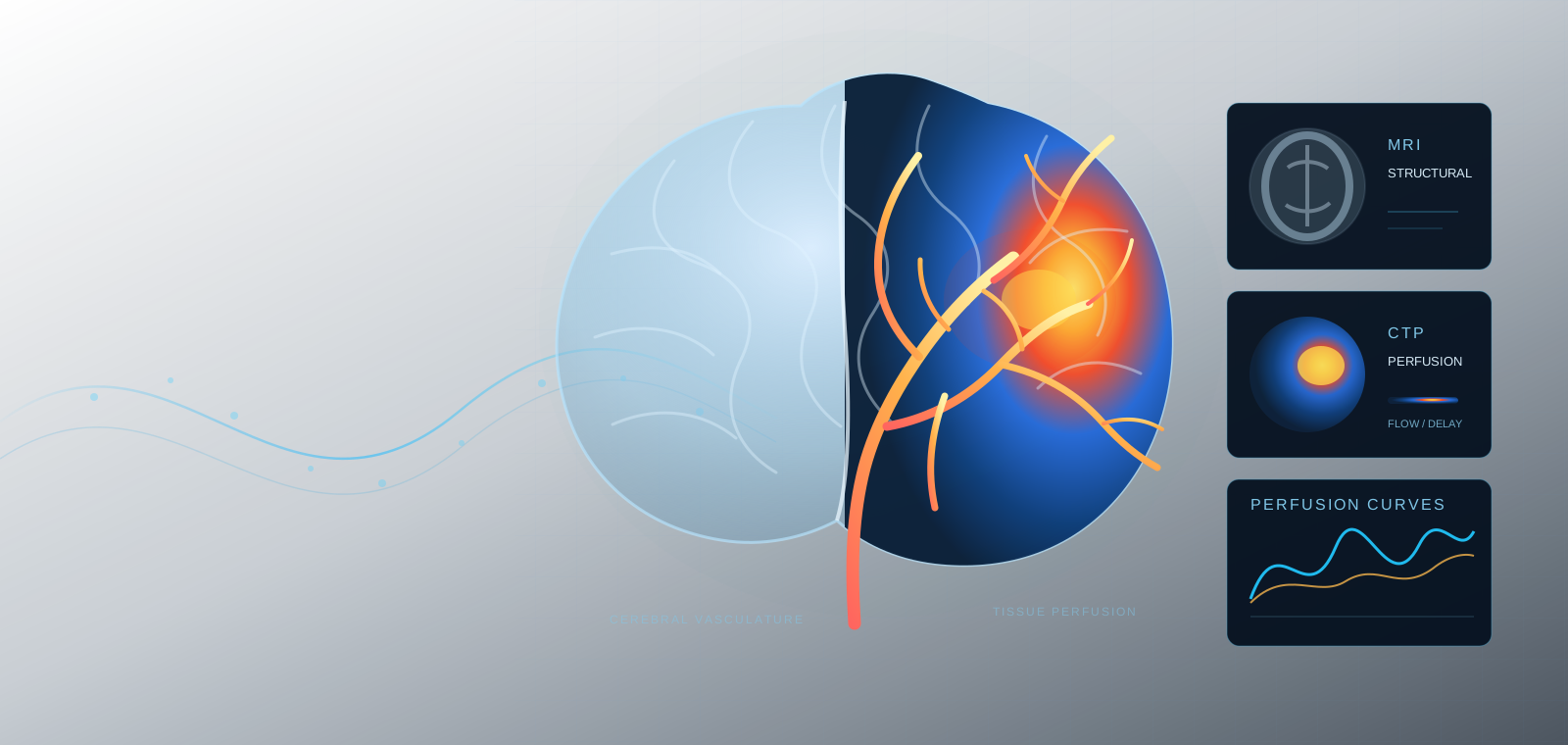
Acute ischemic stroke, thrombolysis, endovascular treatment, perfusion and mismatch imaging, tissue viability, patient selection, clinical outcomes, and the relationship between time, tissue, blood flow, and recovery.
Post-Stroke Epilepsy & Brain Networks
Seizures after stroke, epileptogenesis, outcome prediction, biomarkers, genetics, proteomics, treatment questions, and international collaborative research linking vascular neurology and epilepsy.
Cognition, Language & Neuroplasticity
Bilingualism, multilingual experience, attention, memory, cognitive reserve, Sanskrit learning and recitation, long-duration expertise, contemplative practice, and scientifically testable questions arising from language, learning, expertise, and cultural practices.
Selected scientific contributions
Signature contributions
These studies illustrate several of the scientific questions that have shaped my work, from imaging-guided reperfusion to post-stroke epilepsy and long-term neurological outcomes.
Outcomes in patients with post-stroke seizures
This international collaborative study examined the relationship between seizures after stroke and subsequent clinical outcomes, bringing together investigators across stroke and epilepsy.
View paper →Pathophysiology, diagnosis, prognosis, and prevention of post-stroke epilepsy
This international review connected vascular neurology and epileptology to synthesize current understanding of why epilepsy develops after stroke, how risk can be recognized, and how future preventive strategies might be developed.
View paper →Mismatch-Based Delayed Thrombolysis
This work addressed a question that became central to modern stroke medicine: can imaging identify patients with salvageable brain tissue even when conventional time windows have passed? It helped frame the move from clock time alone toward biologically informed treatment selection.
View paper →Thrombolysis in very elderly people
At a time when advanced age frequently limited access to thrombolytic treatment, this international analysis examined outcomes in very elderly patients and contributed evidence relevant to reconsidering age-based treatment restrictions.
View paper →External expert commentary • Neurology Advisor • AES 2025
Video: Post-Stroke Epilepsy — AES 2025 Expert Insights
This external Neurology Advisor feature is included as professional scientific communication about post-stroke epilepsy. It is presented separately from the peer-reviewed publication record so that media commentary and scientific evidence remain clearly distinguished.
View the Neurology Advisor feature →Scientific trajectory
Questions that connect the work
Earlier and additional contributions
A broader scientific record
Additional studies show the progression of questions around treatment eligibility, patient-centered outcomes, hemorrhage measurement, and imaging-based selection.
Prior stroke, diabetes, and thrombolysis
Patients with both a previous stroke and diabetes had historically been treated cautiously, and in some settings excluded, from intravenous thrombolysis. This study examined whether that exclusion was supported by observed clinical outcomes.
View paper →Thrombolysis after prior stroke and diabetes
Using a large international dataset, this study further examined an important treatment-exclusion question and added evidence relevant to thrombolysis in a population traditionally considered at increased risk.
View paper →Home time as a meaningful stroke outcome
Home time—the number of days a patient is alive and outside institutional care—offers an intuitive, patient-centered measure of recovery. This study examined home time in patients receiving thrombolytic therapy.
View paper →Modified Graeb Score
This collaborative work developed and evaluated an enhanced method for quantifying intraventricular hemorrhage and relating hemorrhage burden to functional outcome.
View paper →MRI mismatch and endovascular patient selection
This study continued the investigation of how advanced imaging might distinguish patients more likely to benefit from endovascular reperfusion therapy.
View paper →Brain Health, Stroke & Collaborative Research in India
A longstanding interest in India's brain-health infrastructure includes the article Stroke Program for India and a broader effort to develop multicenter registries, trials, imaging collaborations, data platforms, training programs, and locally relevant approaches to prevention and treatment.
Read: Stroke Program for India →Biomarkers, Proteomics & Data Science
Neurological diseases are biologically heterogeneous. Current work increasingly integrates clinical data with imaging, biomarkers, proteomics, genetics, and computational approaches to improve biological understanding, risk prediction, and precision neurological care.
Emerging research
Language, Expertise & Cultural Neuroscience
Indian intellectual and contemplative traditions contain highly structured practices involving memory, attention, recitation, visualization, breath regulation, language learning, and sustained concentration. These traditions should neither be dismissed because they are old nor declared scientifically proven merely because they are traditional.
They can, however, generate serious research questions: how does sustained multilingual experience influence brain networks? What are the cognitive demands of Avadhāna? Can long-duration recitation or contemplative practice produce measurable changes in attention, memory, physiology, or neuroplasticity?
Traditional observation → Research question → Testable hypothesis → Scientific investigation → Evidence → Replication
Explore research questions →Explore the scientific record
For the complete publication record and current research activity, use the links below.