Start with the epic, not with a modern theory
Why study the Mahābhārata?
The Mahābhārata is simultaneously narrative, dharma discourse, political reflection, theology, family history, philosophical inquiry, and a record of human beings confronting difficult choices. Its enduring value comes partly from refusing to make those choices artificially simple.
For IvyPandit, the sequence is deliberate: source → context → traditional interpretation → human question → modern comparison, where appropriate. Neuroscience or psychology may sharpen a question, but they do not replace the text.
Text first
A vast narrative world
The Mahābhārata should not be reduced to a collection of moral quotations or treated as a modern psychology manual. It is an Itihāsa whose narrative layers contain dharma, political thought, ritual, theology, kinship, conflict, philosophy, and reflection on the human condition.
Why it remains useful
A laboratory of difficult human situations
Its characters face rivalry, divided loyalty, grief, humiliation, ambition, uncertainty, duty, love, resentment, sacrifice, and consequences they cannot fully predict. Those situations can help readers ask better questions about themselves and society without pretending that ancient categories and modern scientific constructs are identical.
Six pathways
What can a reader gain from sustained study?
Dharma & competing obligations
The epic repeatedly places characters in situations where duties conflict. The value is not a single slogan but learning to see what each obligation demands and what every choice costs.
Leadership & counsel
Kings, elders, teachers, friends, and advisers show how power depends on judgment, listening, timing, loyalty, and the courage to oppose destructive choices.
Family, rivalry & resentment
Kinship does not eliminate competition. Jealousy, comparison, humiliation, inheritance, favoritism, and grievance become forces that can shape generations.
Identity & belonging
Birth, status, recognition, vows, social roles, and chosen loyalties shape how characters understand themselves and what they believe they owe others.
Grief, loss & resilience
The Mahābhārata does not avoid suffering. It asks how people continue to act, remember, learn, worship, govern, and seek meaning after profound loss.
Agency, consequence & uncertainty
Characters act without complete knowledge. The epic is therefore rich material for thinking about decision-making under uncertainty, responsibility, and unintended consequences.
Traditional designation • textual context
Why is the Mahābhārata called the “Fifth Veda”?
The careful answer begins with the broader category itihāsa-purāṇa. Chāndogya Upaniṣad 7.1.2 refers to itihāsa-purāṇa as “the fifth” alongside the four Vedas. Later textual and scholarly traditions apply this Veda-like status specifically to the Mahābhārata as an Itihāsa and as a vast vehicle for dharma, narrative, philosophy, and cultural memory.
This does not require saying that every Hindu school treats the Mahābhārata as identical in canonical status to Vedic śruti. “Fifth Veda” is best presented as a traditional designation expressing breadth, authority, accessibility, and the epic's role in extending Vedic learning into narrative and lived human situations.
Chāndogya Upaniṣad 7.1.2 →
IGNCA discussion of Itihāsa, Purāṇa and the “Fifth Veda” tradition →
Active IvyPandit reading sequence
Where the study currently stands
Origins, lineages & the narrative frame
Who is telling the story? How does memory travel across generations? Why does genealogy matter before the central conflict develops?
Bhīṣma, vows & dynastic responsibility
Duty, sacrifice, succession, loyalty, and the long consequences of decisions made for a family or kingdom.
Pāṇḍavas, Kauravas & escalating resentment
Comparison, status, skill, attention, humiliation, fear, and how rivalry can become increasingly dangerous when grievance is reinforced rather than corrected.
Duryodhana's poisoning of Bhīma
An early turning point for examining envy, aggression, secrecy, vulnerability, survival, and the difference between ordinary rivalry and destructive intent.
Character pathways
Follow a person across the epic
Vow, memory, duty & the end of life
Study dynastic responsibility now and return later to Bhīṣma's final teachings, memory, agency, and conscious orientation toward death.
Research pathway →ARJUNACrisis, identity & resilience
From warrior identity and moral paralysis to the transformative dialogue of the Bhagavad Gītā.
Watch →KARṆAIdentity, belonging & recognition
A pathway for studying social acceptance, loyalty, status, self-worth, generosity, grievance, and difficult allegiance.
Watch →Rivalry, power & resentment
The current reading point offers an early opportunity to follow how strength, comparison, fear, envy, and retaliation shape both men over time.
Dharma, judgment & consequence
A future pathway for examining truth, kingship, duty, risk, moral complexity, and the burden of decision.
Dignity, injury, memory & justice
A future pathway centered on voice, humiliation, legal-moral argument, memory of wrong, and demands for justice.
IvyPandit video pathway
Mahābhārata: text, characters & neuroscience questions

Why Study the Mahābhārata?
A starting lecture on why the epic still matters for dharma, human behavior, leadership, family, conflict, and self-reflection.
Watch on YouTube →
Mahābhārata & Neuroscience: Study Methodology
How to move from source text to interpretation to research question without treating the epic as a modern neuroscience textbook.
Watch on YouTube →
Arjuna and Mental Resilience
Arjuna as a case for studying crisis, appraisal, identity, duty, emotional regulation, and resilience.
Watch on YouTube →
Kṛṣṇa, Cognitive Reframing & Emotional Regulation
A longer exploration of the Gītā dialogue using modern psychological concepts as comparative lenses.
Watch on YouTube →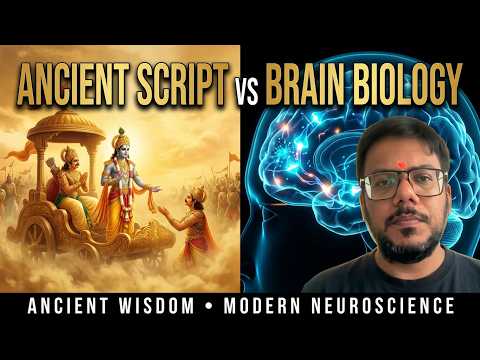
Karna: Identity, Social Acceptance & Self-Value
A character-centered reflection on identity, belonging, recognition, status, and self-worth.
Watch on YouTube →
Mahābhārata, Experience & Neuroplasticity
A short exploration of how experience changes the brain—and where modern neuroplasticity should remain distinct from textual interpretation.
Watch on YouTube →
Mahābhārata Characters as Case Studies
A set of character-based questions for disciplined interdisciplinary inquiry.
Watch on YouTube →
Long-Duration Cultural Expertise & Mahābhārata
How sustained study and cultural expertise can generate testable neuroscience questions.
Watch on YouTube →Research discipline
How IvyPandit uses neuroscience around the Mahābhārata
For example, a narrative about rivalry can motivate questions about social comparison or emotion regulation, but the presence of rivalry in the epic is not scientific evidence for a modern neural mechanism. The purpose of interdisciplinary work is to generate better questions while protecting the integrity of both the classical text and modern science.
Read the IvyPandit method: From Śāstra to Scientific Discovery →
Connected knowledge
Continue exploring
Move between the text, interpretation, lectures, research questions, and evidence without losing the thread.
Bhagavad Gītā Study Hub
Continue from the wider Mahābhārata into Arjuna’s crisis, Kṛṣṇa’s teaching, dharma, action, and resilience.
Explore →RESEARCH QUESTIONBhīṣma, Memory & End-of-Life Cognition
A source-conscious collaboration pathway linking Mahābhārata scholarship, medical humanities, palliative care, and cognition.
Explore →METHODFrom Śāstra to Scientific Discovery
The framework IvyPandit uses to move from classical source to modern research question without collapsing categories.
Explore →KNOWLEDGE NAVIGATORExplore all Mahābhārata resources
Search the growing IvyPandit index for Mahābhārata articles, videos, questions, lectures, and related themes.
Explore →